top of page

Blog

Blog Picture.jpg
Search

A forgotten road system that is almost 60 years old has been partially expunged.


The loop of Tanglin Halt Road and Tanglin Halt Close, named after a mode of transport that mostly disappeared from Singapore in 2011, has been reduced in area to make way for new developments.


Tanglin Halt Railway Station - briefly mentioned in my book, Jalan Singapura - opened in 1932, part of the railway line running from Tanjong Pagar in the south to Woodlands in the north, and then across the Causeway to Malaya.


The railway station was named “Halt” because trains stopped there; as for “Tanglin”, it was an oddity as it was nowhere near Tanglin or Tanglin Road. The nearest trunk road to the station was Buona Vista Road (later North and South Buona Vista Road).
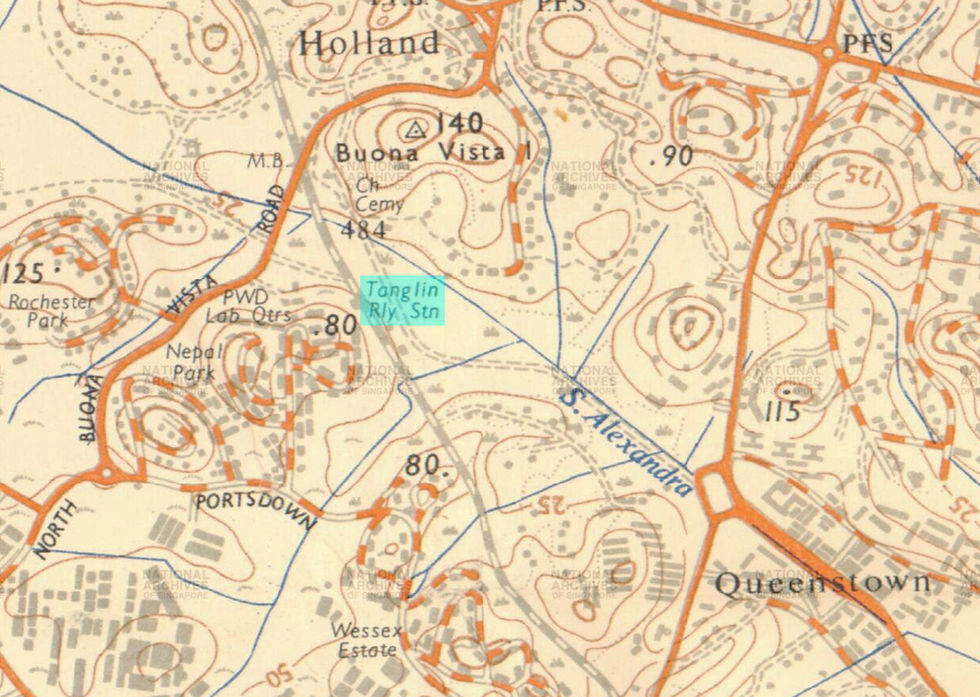
A 1961 map showing Tanglin Halt Railway Station (shaded blue) and the surrounding area. Base picture credit: R W H Davies.

Over the next three decades, the station would close and open multiple times, a tussle between low passenger usage and the need for a stop to serve the surrounding area.


The sparsely-populated rural countryside around the station gradually receded by the early 1960s. Queenstown New Town, Singapore’s second satellite town after Toa Payoh, was expanded to the west, from the Alexandra Road area to the railway tracks.


The HDB estate of Tanglin Halt, and the roads of Tanglin Halt Road and Tanglin Halt Close, came up next to the station, and were named after it.

Tanglin Halt in 1963. The Tanglin Halt Road-Close loop is shaded blue.
Tanglin Halt Estate in the 1960s. Credit: My Queenstown.

The land around the loop formed by Tanglin Halt Road and Commonwealth Drive was filled with the HDB flats of Tanglin Halt Estate. As for the 20 acres of land around the triangular loop formed by Tanglin Halt Road and Tanglin Halt Close, it was taken up by Tanglin Halt Industrial Estate, managed by Jurong Town Corporation. There were 38 lots for cottage industries such as textiles, woodworks, electronics, and chocolate.


On the map, that made sense: The site was next to the HDB flats, which were a ready source of labour; it was also next to the railway station, which, though closed to passenger traffic then, could still be an option for the transport of raw materials and goods to and from Malaysia.


By 1966, Tanglin Halt Close was lined by low-rise factories and workshops.

Credit: Ministry of Information and the Arts Collection, courtesy of National Archives of Singapore.

There was a factory for Setron Limited, the first television assembly plant in Southeast Asia, which produced Singapore’s first locally-assembled black-and-white TV sets.
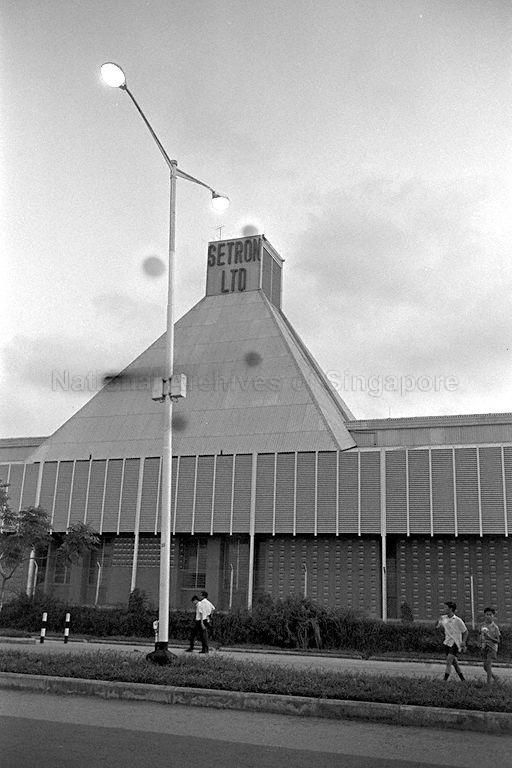
Credit: Ministry of Information and the Arts Collection, courtesy of National Archives of Singapore.

This was Lim Kah Ngam (Singapore) Limited, a woodworks factory.

Credit: Ministry of Information and the Arts Collection, courtesy of National Archives of Singapore.

There was also Daiwa Limited, a Japanese fishing equipment brand.

From the late 1980s, as Singapore’s manufacturing sector matured and larger industrial estates opened around the island, these companies began relocating from Tanglin Industrial Estate. The last newspaper advertisements for brands housed in the area petered out by the year 2000.

Tanglin Halt in 1988.

The roar of passing trains ceased in 2011, when the line between Tanjong Pagar and Woodlands closed for good, and the railway tracks were replaced by the Rail Corridor.


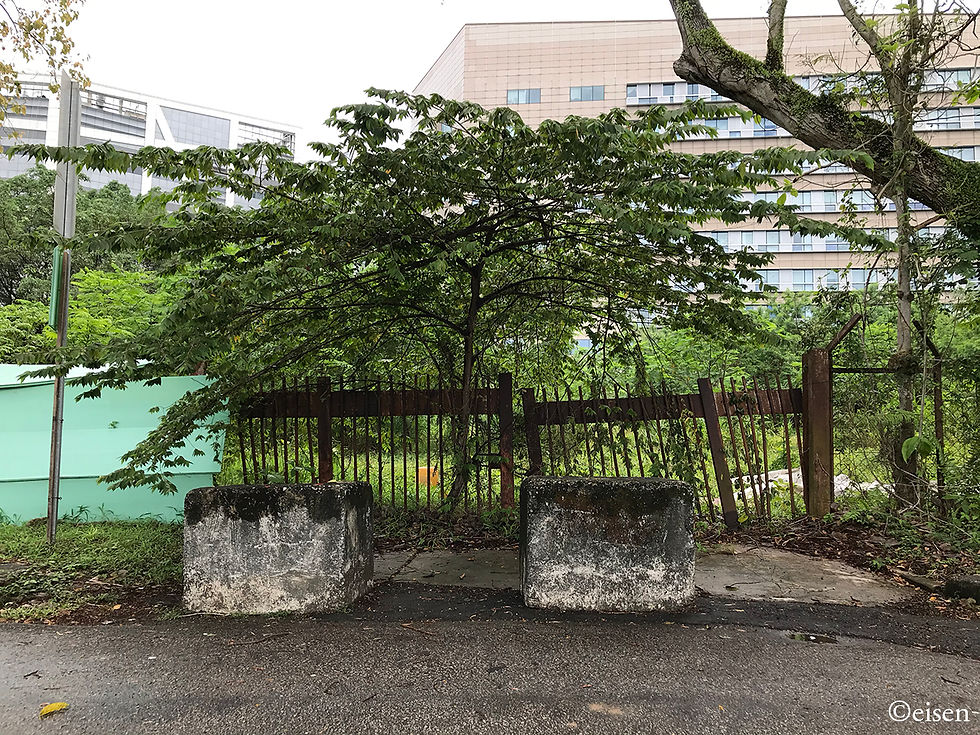
Sometime between 2000 and 2015, when I first visited the area, the buildings of Tanglin Halt Industrial Estate were torn down. All that’s left are an open field, and rusted fences and gates as the only evidence of the activities once held there.
And of course, there are the roads.


Tanglin Halt Road:
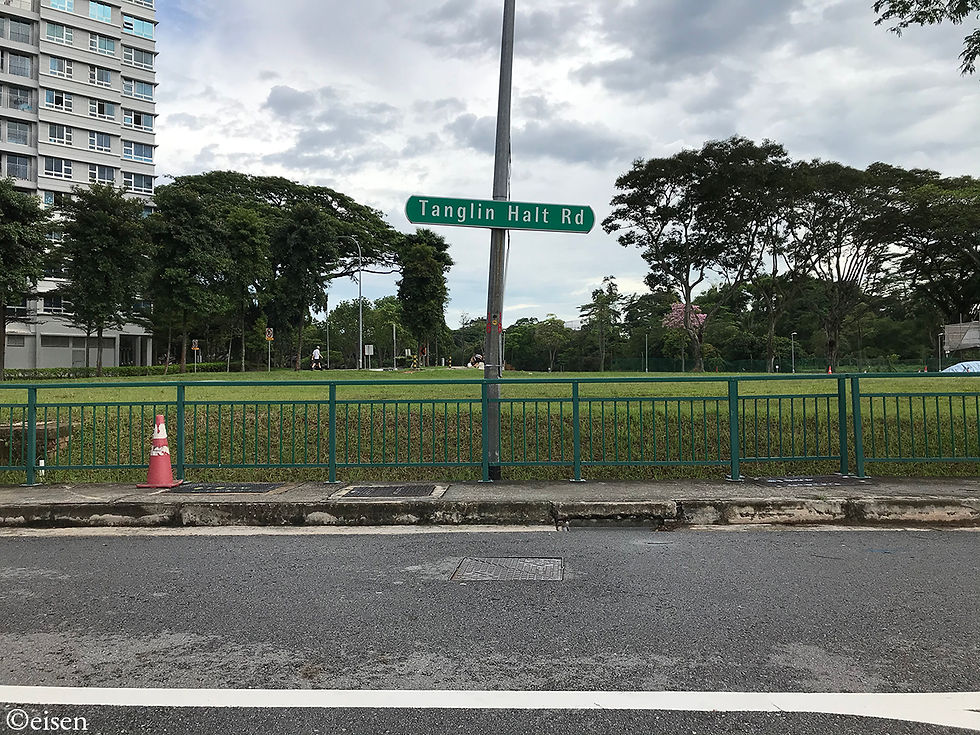
Tanglin Halt Close:
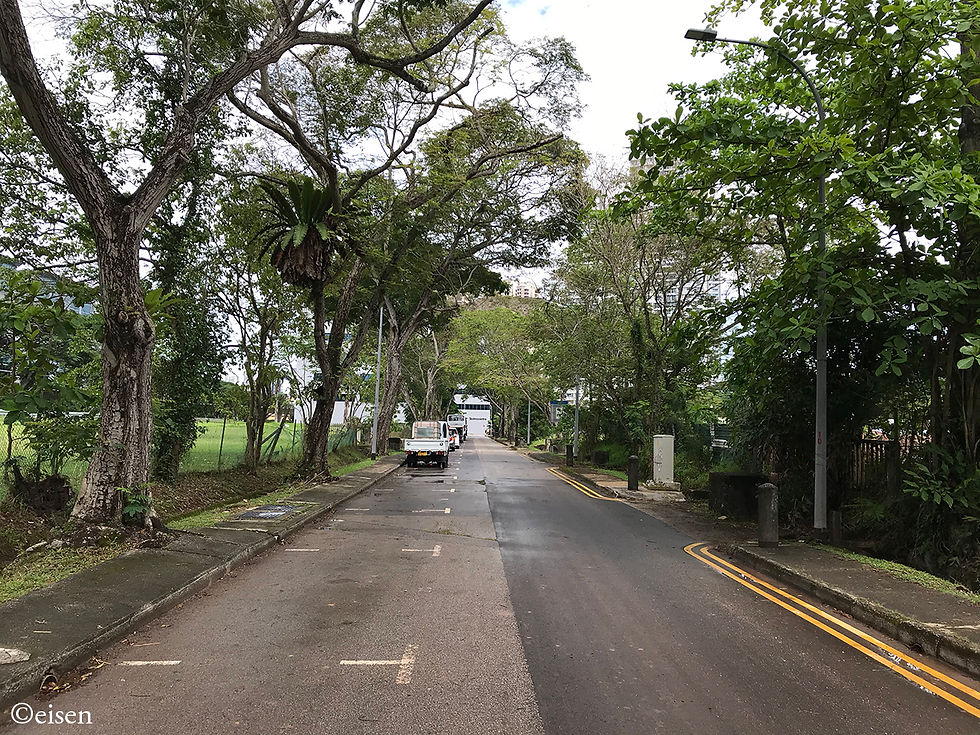
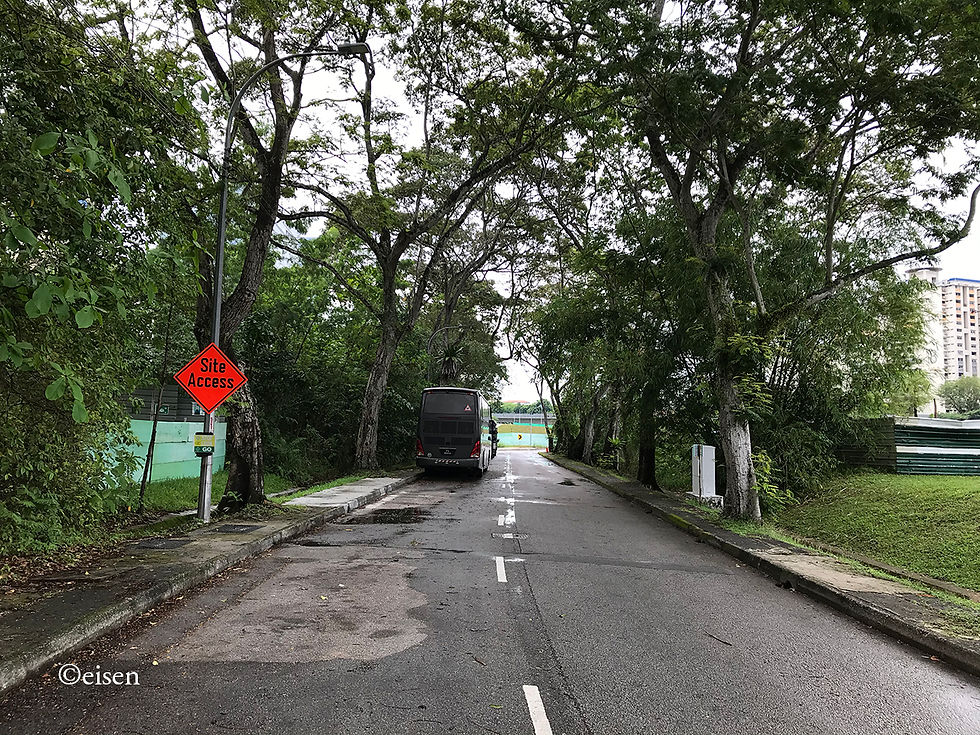
However, sometime between 2019 and 2020, the northern part of the original loop was shaved off.


The new northern part of the shrunken loop is clearly marked out by the fresh, white, recently-laid pavement.
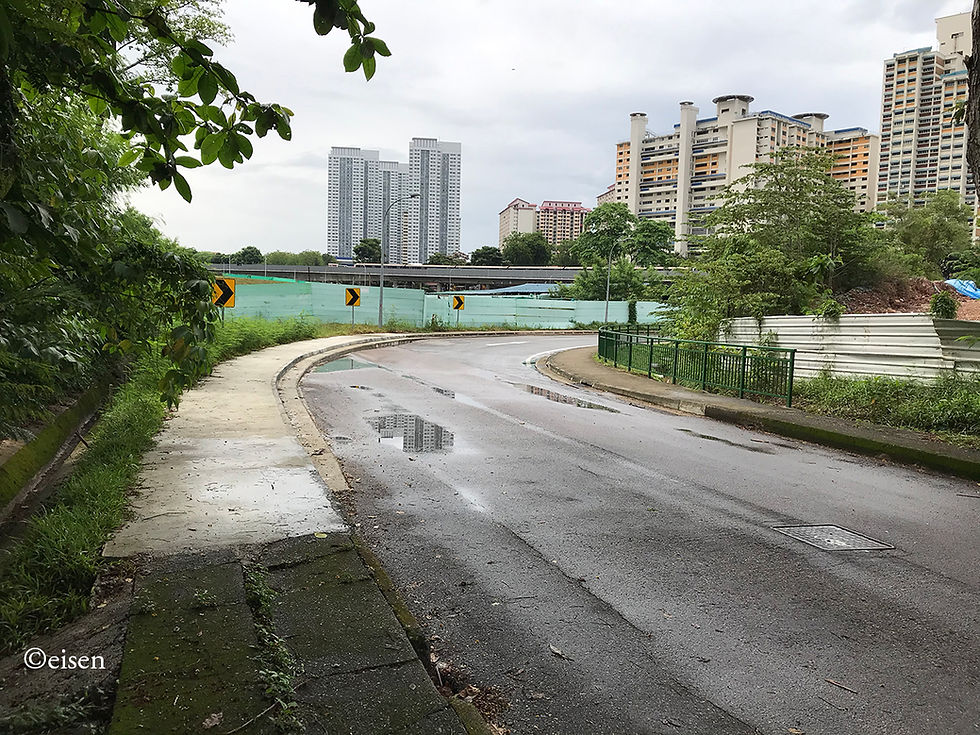
Here, the original pavement has given way to the new pavement.

The new northern part of the loop, where a newly-laid section of Tanglin Halt Road gives way to a newly-laid section of Tanglin Halt Close:
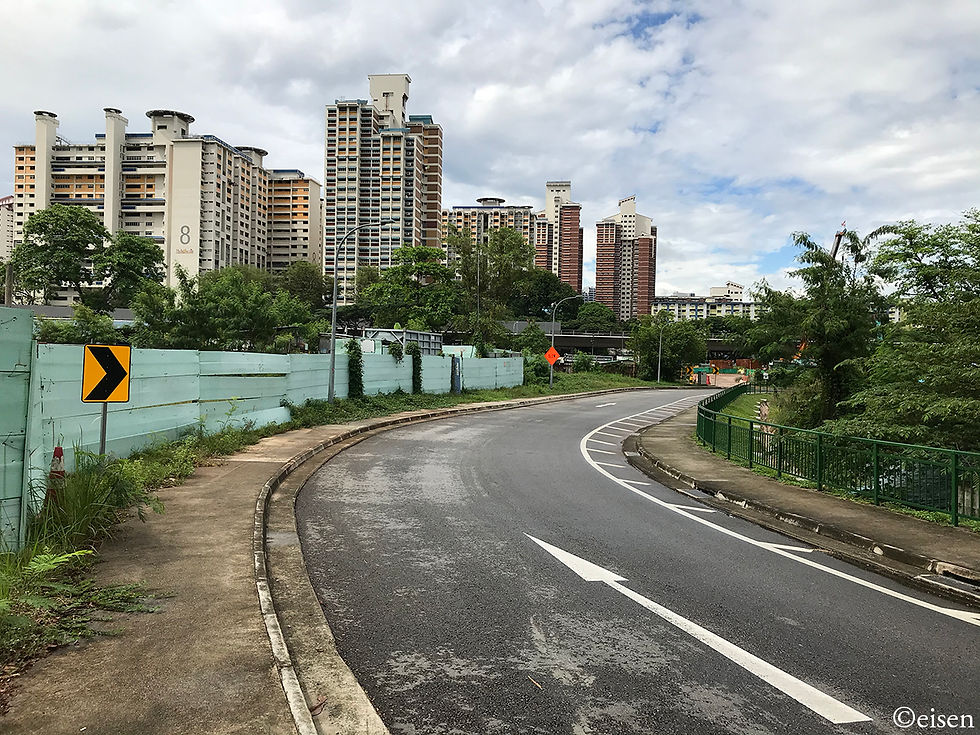
Behind hoarding, an original stretch of Tanglin Halt Road has been expunged and covered with fresh grass.
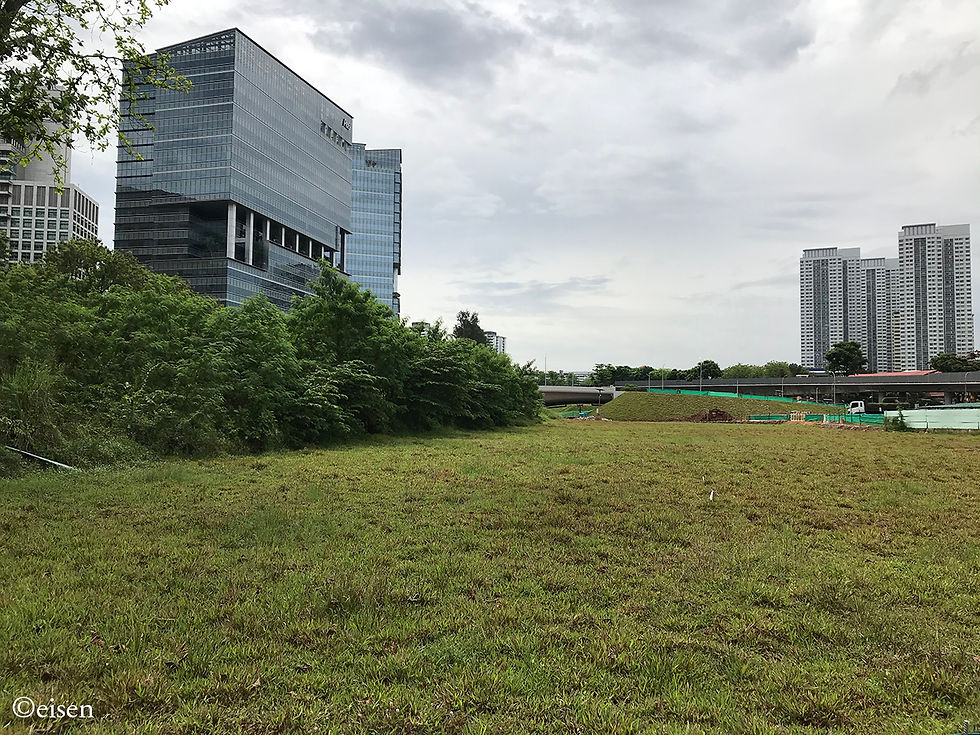
The reason for the shaving of the loop could be this: What looks to be a new road overhanging the Rail Corridor, linking North Buona Vista Drive and the Biopolis complex to Commonwealth Avenue.

This aerial shot shows the recent changes to the Tanglin Halt Road-Close loop: What’s left of the original loop is shaded light blue, what’s expunged is shaded red, while new road is shaded dark blue.
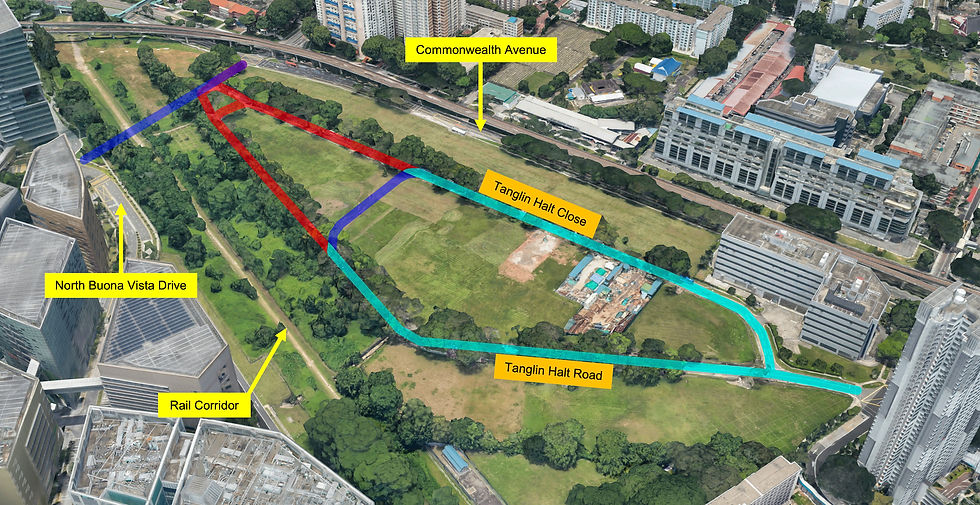
Base picture credit: Google Maps.

The rest of the historic loop is on borrowed time. According to the 2019 URA Master Plan, the area is slated for redevelopment into a business park. The loop does not even appear on the Master Plan map.
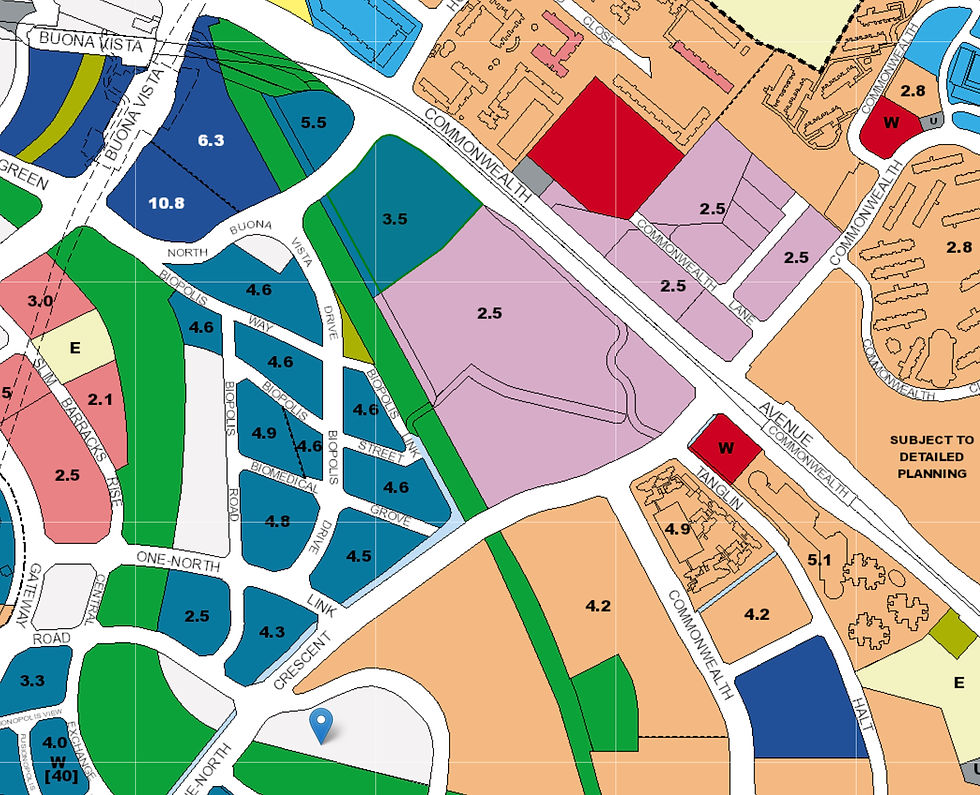
Credit: Urban Redevelopment Authority.

Most of Tanglin Halt Estate itself is also slated for redevelopment very soon, under the Selective En-bloc Redevelopment Scheme. More of that in another post.

 
  • Apr 13, 2021

For Muslims in Singapore, the holy fasting month of Ramadan begins today.


Majlis Ugama Islam Singapura (MUIS), or the Islamic Religious Council of Singapore, announced yesterday:


According to the astronomical calculations, the crescent for the month of Ramadan did appear this evening after sunset for about 16 minutes. As such, the first day of fasting for the month of Ramadan falls tomorrow, Tuesday, 13 April 2021.


Sighting of the moon - an ancient tradition practised by Muslims to determine when exactly each month begins and ends. This is especially crucial for the months of Ramadan (the ninth month of the Islamic calendar), Syawal (the 10th month), and Zulhijjah (the 12th month). These would in turn determine when fasting begins and ends, and when Hari Raya Puasa and Hari Raya Haji take place.

Credit: David Moug, CC BY 3.0.

There are two methods of sighting the moon:


1. Rukyah - using the eyes, be it unaided or with instruments such as telescopes.


2. Hisab - using astronomical calculations.


From the newspaper archives, it seems that for much of modern Singapore’s history, Method 1 was used by the religious authorities.


From the Malaya Tribune, 3 May 1924:

The observation stations were Mount Faber, Fort Canning Hill, Pasir Panjang’s The Gap, Tanah Merah Besar, and “the Reservoir, Serangoon”.


The first three locations were obviously chosen for their height. Tanah Merah Besar was known for its seaside cliffs at the time, which would have provided a good vantage point - the cliffs are long gone, replaced by Changi Airport today. As for the “the Reservoir, Serangoon”, I believe it refers to the service reservoir which is presently Woodleigh Waterworks, off Upper Serangoon Road.

The Gap, in a 1923 map of the Pasir Panjang area. Credit: The National Archives, United Kingdom.

Two observation boats were also sent out to the “high seas”.


From the Singapore Free Press, 16 June 1950:

The moon-sighting locations had somewhat changed. Now they included Kallang Airport (opened 1937), Hill Street Police Station (still standing today), “on top of the hillock in Palmer Road” (probably the site of Masjid Haji Muhammad Salleh today), and Sultan Shoal, “three miles south of Singapore” (presently surrounded by the reclaimed areas of Tuas South and Jurong Island).

Kallang Airport in 1950. Credit: Ministry of Culture Collection, courtesy of National Archives of Singapore.

That year, Ramadan began a day later because the moon was not sighted.


From The Straits Times, 1 April 1957:

That year, “the sighting of the moon in the Federation (of Malaya, which would gain its independence from the British that August) would be recognised in Singapore”. That proved to be useful, as “the new moon (for the beginning of Ramadan)... was not seen in Singapore”.


By the 1970s, the moon-sighting process in Singapore was evolving.


In 1972, the Berita Harian reported that “a decision... (would) be made by the (religious authorities) on whether or not to begin the fast according to astronomical calculations should the moon not be sighted at the appointed time” - which meant reliance on just Rukyah was shifting to a combination of Rukyah and Hisab.

Sometime in the mid-1970s, Singapore shifted to astronomical calculations, which I believe is still the case today. (Malaysia still practises a combination of Rukyah and Hisab.)


If Rukyah is still practised in Singapore today, I wonder where the moon-sighting locations would be. Mount Faber and Fort Canning Hill would still be favoured, I guess, but how about the top of our tallest skyscrapers too?

 
  • Apr 9, 2021

The merging of schools continues in Singapore, a result of the following:


1. The city-state’s falling birth rate;


2. An uneven geographical distribution of young people, resulting in some towns with younger populations than others;


3. The Ministry of Education’s determination to consolidate teaching resources for economies of scale, and to ensure students get “a fuller school experience” and a greater “diversity of experiences and choices” (their words).


Over the next three years, 18 primary and secondary schools will be merged into nine institutions.


In all, since 2010, 68 schools have been merged, including eight junior colleges in 2019.


At the same time, 23 schools have also opened, most of them in newer towns such as Punggol and Sengkang. That means an overall deficit of 11 schools.


Here’s the list of 18 schools to be merged over the next three years, along with historical trivia for each of them:


2022


In Jurong West town, Juying Primary will merge with Pioneer Primary.

The merged school will occupy Juying’s campus, then move to Tengah town in 2025, becoming the town’s first primary school.


Juying Primary was founded as Ju Eng Public School in Jalan Kayu in 1940. It closed in 1987, and the campus was converted into the Ju Eng Home for Senior Citizens, which still stands along Jalan Kayu today.

Ju Eng Public School in 1963. Credit: Singapore (SG) School Memories.

The school was revived in 1995 - but at Jurong West Street 91, with the “pinyin-ised” name of Juying, which means “Gathering of Talent”.


Pioneer Primary started life in Juying Primary, with 19 classes held in the latter’s campus in January 1995. By April, Pioneer moved to its current campus at Jurong West Street 81. Next year, its history will come full circle, and it will move back to its birthplace in Juying.


Pioneer Primary’s campus will probably be demolished to make way for the Jurong Region MRT Line’s elevated tracks connecting the future Gek Poh and Tawas stations.

Pioneer Primary School. Credit: Google Maps.

My recommended name for the merged school: First Tengah Primary, just as Toa Payoh town’s first schools were First Toa Payoh Primary and Secondary. Juying can be the school’s Mandarin name.


2023


In Choa Chu Kang town, Teck Whye Secondary will merge with Chua Chu Kang Secondary.

The merged school will occupy Teck Whye’s campus.


Teck Whye Secondary opened as Jalan Teck Whye Secondary School in 1966, named after its address. It dropped the “Jalan” in 1980, and in 2002, moved to Teck Whye Crescent.

Jalan Teck Whye Secondary School in 1968. Credit: Teck Whye Secondary School.

Chua Chu Kang Secondary was founded in 1992. Like the Group Representation Constituency and ward of Chua Chu Kang, the school’s name starts with “Chua”, not “Choa”.

Chua Chu Kang Secondary School. Credit: Google Maps.

My recommended name for the merged school: Teck Whye Secondary.


Townsville Primary of Ang Mo Kio town will merge with Guangyang Primary of Bishan town.

The merged school will occupy Townsville’s campus.


Townsville Primary has the honour of being officially opened twice by Prime Minister Lee Hsien Loong - first in 1985, when he was Minister of State for Defence, and Trade and Industry; and again in 2002, after it merged with Chong Shan Primary and moved to its current campus at Ang Mo Kio Avenue 10, when he was Deputy Prime Minister.

A student performance during the official opening of Townsville Primary School in 1985. Credit: Ministry of Information and the Arts Collection, courtesy of National Archives of Singapore.

Guangyang Primary has a long history going back more than a hundred years to Kong Yiong School, which was founded in 1918.


Between 1930 and 1992, its campus was at the junction of Kovan Road and Yio Chu Kang Road. In 1984, the primary and secondary branches separated into Kong Yiong Primary and Secondary; in 1988, the primary school’s name was “pinyin-ised” to Guangyang.


Five years later in 1993, the school moved to its current campus at Bishan Street 12. Part of the old campus at Kovan Road lives on as the Pertapis Children’s Home.

Pertapis Children’s Home. Part of the old campus has made way for Highland Centre. Base picture credit: Google Maps.

My recommended name for the merged school: Townsville Primary. The place name “Guangyang” will live on in Guangyang Secondary, and Guangyang can be the merged school’s Mandarin name.


Telok Kurau Primary of the Bedok Reservoir area will merge with Eunos Primary of the Eunos area.

The merged school will occupy Telok Kurau’s campus.


Telok Kurau Primary is another school with a long history, going back to 1926 as Telok Kurau English School at Telok Kurau Road. Singapore’s first Prime Minister Lee Kuan Yew enrolled in 1930, while Malaysia’s 3rd Prime Minister Hussein Onn followed in 1931.


The school was subsequently renamed Telok Kurau East School, then merged in 1985 with Telok Kurau West School to become Telok Kurau Primary. In 2001, the school took in Bedok Town Primary and moved to its current campus at Bedok Reservoir Road.

Telok Kurau English School, sometime between 1926 and 1940. Credit: Courtesy of National Archives of Singapore.

Eunos Primary opened on its current site at Jalan Eunos in 1984, taking the place of Jalan Eunos and Jalan Daud schools, which were demolished.

Jalan Daud School, which made way for Eunos Primary.

My recommended name for the merged school: Telok Kurau Primary.


In Bedok town, Bedok Green Secondary will merge with Ping Yi Secondary.

The merged school will occupy Bedok Green’s campus.


Bedok Green Secondary opened in 2001.

Bedok Green Secondary School. Credit: Google Maps.

Ping Yi Secondary was founded in 1930 as Pin Ghee Public School in Kampong Chai Chee, along Changi Road. It closed in 1976, but was revived in 1983 as Ping Yi Secondary at Chai Chee Street.

Pin Ghee Public School in 1966. Credit: yeohongeng.blogspot.com.

In 2011, Bedok Town Secondary absorbed Chai Chee Secondary. In 2016, Ping Yi Secondary absorbed Bedok Town. Soon, it will merge again.


My recommended name for the merged school: Ping Yi Secondary.


In Clementi town, Tanglin Secondary will merge with New Town Secondary.

The merged school will occupy New Town’s campus.


Like Ping Yi, Tanglin Secondary has a history of multiple mergers.


Tanglin Integrated Secondary Technical School opened in 1964 in Tanglin Halt Estate, hence its name. It acquired its present name when it moved to its current site at West Coast Road in 1993.

A map of Tanglin Halt Estate in 1966. The sites of Tanglin and New Town secondary schools are shaded blue.

In 2007, Ghim Moh Secondary and Jin Tai Secondary merged to form Clementi Woods Secondary. In 2016, Clementi Woods was folded into Tanglin.


New Town Secondary opened in 1965, one year after Tanglin, just across Commonwealth Avenue from Tanglin; at the time, the “New Town” referred to Queenstown New Town. In 1969, it absorbed the neighbouring Baharuddin Vocational School. In 1998, it moved to Dover Road.

New Town Secondary School in 1965. Credit: Ministry of Information and the Arts Collection, courtesy of National Archives of Singapore.

New Town’s former campus, now known as 121 Queensway, is still standing at the junction of Queensway and Commonwealth Avenue. Last year, it was converted into temporary housing for migrant workers as part of COVID-19 measures.

The former sites of Tanglin Integrated Secondary Technical School and New Town Secondary School, now the high-rise blocks of Commonwealth View, and 121 Queensway, respectively. Base picture credit: Google Maps.

My recommended name for the merged school: Tanglin New Town Secondary.


In Bukit Panjang town, Greenridge Secondary will merge with Fajar Secondary.

The merged school will occupy Fajar’s campus.


Greenridge Secondary was founded as Dunearn Secondary Technical School in 1964. It was part of a cluster of four schools with the name Dunearn, at the junction of Dunearn Road and Hillcrest Road. In 1992, it took on its current name and moved to its current site at Bukit Panjang Ring Road.

The four schools in a 1966 map.

The four Dunearn schools have been replaced by the prestigious schools of Nanyang Girls’ High School, National Junior College, and Raffles Girls’ Primary School.


Fajar Secondary was founded in 1994, first occupying the campus of Greenridge Secondary, before moving to its current site at Gangsa Road two years later. In 2016, it absorbed Chestnut Drive Secondary, a school founded in 1968.

Fajar Secondary School. Credit: CPG Construction Professionals.

Now, Greenridge and Fajar will come together again.


My recommended name for the merged school: Greenridge Secondary.


In and around the city, Stamford Primary will merge with Farrer Park Primary.

The merged school will occupy Farrer Park’s campus.


Stamford Primary was founded as Stamford Girls’ School in 1951, named as such even though it was at the junction of Waterloo Street and Middle Road, nowhere near Stamford Road. It moved a short distance to its current location at Victoria Lane in 1986.


Its former campus still stands as Stamford Arts Centre today.

Stamford Arts Centre. Credit: The Straits Times.

Stamford Primary is currently the last primary or secondary school inside the boundaries of the old Town of Singapore.


Farrer Park Primary was formed from multiple mergers.


May North and May South primary schools were founded between 1966 and 1969 at May Road, off Towner Road. They later merged into May Primary School. May Primary then merged with Boon Keng Primary in 2002 and moved to the Farrer Park area, taking on the name Farrer Park Primary.

The former campus of May Primary School in 2008. It was demolished between 2011 and 2015. Credit: Google Maps.

My recommended name for the merged school: Stamford Farrer Park Primary.


2024


In Woodlands town, Fuchun Secondary will merge with Woodlands Ring Secondary.

The merged school will occupy Woodlands Ring’s campus.


Fuchun Secondary was founded in 1986.

Fuchun Secondary School. Credit: Google Maps.

Woodlands Ring Secondary was founded in 1998. In its first two years, it served as a holding school for Woodlands Ring Primary, Evergreen Primary, Sembawang Secondary and Orchid Park Secondary.

Woodlands Ring Secondary School. Credit: Google Maps.

My recommended name for the merged school: Woodlands Ring Secondary. Fuchun can be the school’s Mandarin name.


***


Whenever schools are merged, layers of history fold into each other, and inevitably, something is lost - be it architecture, site-specific memories, or physical records. I hope efforts are made to conserve these as much as possible.


Copyright © 2025 Eisen Teo. Proudly created with Wix.com

bottom of page